Mortgage Lender Product Fees vs. Interest Rates: Weighing Your Options

Mortgage Lender Fees vs. Interest Rates: Weighing Your Options
When choosing a mortgage, you often encounter a trade-off between the lender’s product fee and the interest rate. In essence, a higher product fee usually comes with a lower interest rate, while a lower fee means you might pay a slightly higher rate. At first glance, if the overall amount paid over the fixed rate period is nearly the same, it begs the question: Is there any real benefit to opting for one over the other?
Understanding the Trade-Off
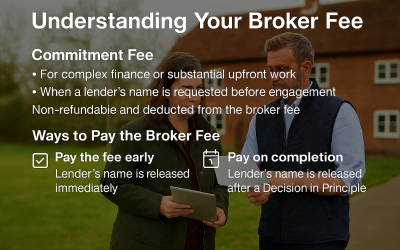
A product fee is an upfront charge the lender applies to secure your mortgage deal. It can sometimes be added to the total loan amount, meaning you don’t necessarily need to pay it out of pocket immediately. In contrast, the interest rate determines your monthly repayments and the total cost of borrowing over the mortgage term. Essentially, the higher fee–lower rate option aims to reduce your ongoing interest costs, while the lower fee–higher rate option minimises upfront charges.
The Calculated Outcome
Over the fixed rate period, many borrowers find that the mathematical sum of monthly interest plus the product fee ends up being quite similar regardless of which option they choose. Calculators and detailed comparisons often show that the overall cost difference is minimal. If that’s the case, the decision might not come down strictly to fees versus rates; it can hinge on other personal financial factors.
What Factors Should You Consider?
Cash Flow Flexibility: If you have the cash to comfortably pay a higher fee upfront, opting for a lower interest rate might reduce your monthly repayments. Conversely, if you prefer to keep more cash on hand, a product with a lower fee—even with a slightly higher rate—might be more attractive.
Repayment Strategy: Consider your long-term plans. If you anticipate moving or remortgaging before the end of your fixed rate period, the differences might not fully materialise, making it less critical which option you choose. On the other hand, if you intend to stick with the same deal for the full term, even small differences can add up, and your repayment strategy might favour one approach over the other.
Risk Tolerance and Financial Simplicity: Some borrowers find comfort in having predictable, straightforward monthly payments. A higher initial fee balanced by a lower rate may offer stability and ease of budgeting. Others might prefer the simplicity of lower upfront costs, particularly if their financial situation is subject to change.
Conclusion
If the overall cost over your fixed rate period shows little difference, selecting one option over the other can come down to personal circumstances. It’s less about the numbers on paper and more about how you manage cash flow, your short- versus long-term financial goals, and the peace of mind you want regarding monthly repayments. Ultimately, both options can be viable; the key is tailoring your choice to fit your own financial strategy and life situation, ensuring your mortgage aligns with your unique goals.